Tea in the Pavilion or at the Boundary?
Tea in the pavilion or at the boundary works best when it suits the weather and your matchday; choose a setting that keeps the break welcoming and easy.

The most common mistake with village-cricket tea is choosing a serving spot before deciding how people will eat and drink there. A table exposed to a blustery gust can send napkins skittering, while a crowded pavilion can turn a short break into a queue. Tea in the pavilion or at the boundary should suit the weather, the food and the sort of interval the club wants to offer.
Tea in the pavilion suits shelter and a sit-down break
A pavilion gives players and visitors a place to wash their hands, find a chair and eat under cover. Tables make plates and cups easier to manage than balancing them on a knee, and bad weather need not send everyone searching for a dry corner. A hatch, kettle and collection tray can make even a modest room feel ready for the interval.
Indoor tea also gives the club a clear home for serving dishes, crockery and rubbish. The tea team can keep food on a firm surface, and guests have an obvious place to ask where things are. If people need warmth, a seat or a quieter place to eat, the pavilion can make the break more comfortable.
The drawback is that a small room can become busy when players and visitors arrive together. A serving hatch opening into the only doorway may slow the line, and a pavilion away from the pitch can make the interval feel disconnected from the match. Check that the serving point does not block access to changing rooms or other facilities.
Boundary-side tea keeps the break outdoors
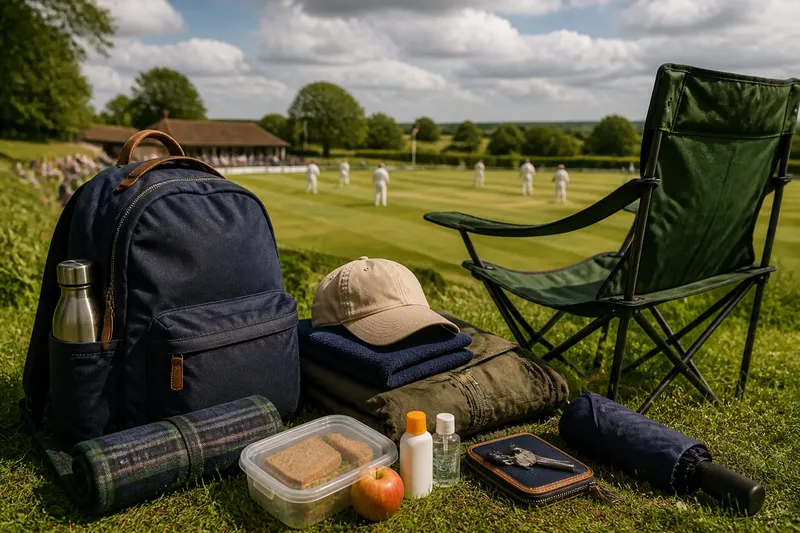
A table near the boundary lets people stay outside and keep the match in view. It can work well when there is a sheltered, level patch away from the playing area, with a sensible route for carrying food from the kitchen. A folding table, serving trays and a cloth can provide a simple base for cups and plates.
The open-air setting is informal: spectators can join the gathering without going through a particular door, and players can collect food on the way back to their changing area. But wind, rain and damp grass can make serving uncomfortable. Hot drinks also need careful handling around people passing by, so keep the table away from a busy route and out of the playing area.
Think about who will be comfortable there. Someone who needs a chair or shelter may prefer the pavilion, while a visitor who wants to stay near the field may welcome an outdoor option. An indoor fallback is useful if the weather turns or the boundary spot becomes unpleasant.
A simple hybrid can offer both shelter and fresh air
Serving from the pavilion while putting a few chairs outside can suit a ground with a compact room and a sheltered patch nearby. Guests can collect food indoors and sit where they feel comfortable, without asking volunteers to run several separate serving stations. Keep cups, rubbish and used plates easy to return to the same collection point.
Say a club has a hatch facing a level, sheltered area beside the boundary, and the pavilion has room for a few guests who want to sit indoors. The volunteers could serve plates through the hatch, place chairs outside and keep a collection tray beside the serving point. The expected result is an outdoor place to eat, with an indoor option still available, while the tea team avoids carrying dishes back and forth across the ground.
Choose the tea setting by checking these practical details
- Check the weather shelter. If the pavilion is dry and the boundary is exposed, serve indoors; if the outdoor spot is sheltered and conditions are comfortable, an outside table may work. If neither is suitable, use another covered area the club is allowed to use.
- Check the seats. If the expected guests need chairs and the pavilion has them, make indoor seating available; if not, add suitable seats outside or choose a different space.
- Check the serving surface. If there is a stable table or hatch near the serving point, use it; if the only option is uneven ground, move the table to a firm spot or serve indoors.
- Check the route for food and drinks. If servers can carry items without crossing a crowded passage, use that route; if not, move the serving point or simplify what is carried.
- Check where hot drinks will be handled. If people can collect them without squeezing past one another, make that point clear; if the space is cramped, serve hot drinks from a less busy spot.
- Check the volunteer workload. If one serving point lets volunteers serve and clear without leaving a queue unattended, keep it; if two locations require repeated trips, bring food and seating closer together.
- Check the fallback. If a covered room is available when outdoor conditions worsen, tell guests where to move; if it is not, choose a suitable covered serving place before setting up.
Follow the club’s food-handling arrangements and any instructions for equipment used to serve or prepare food.
Which tea arrangement fits your matchday?
Is pavilion tea better in wet or chilly weather?
It can offer shelter and a place to sit, provided the room is accessible and has room for the people expected. If it is too cramped, use a suitable covered alternative or keep the serving point separate from the seating.
Can boundary-side tea work at a small ground?
It can, if there is a level, sheltered place away from play and busy walking routes. If the boundary is exposed or crowded, serve from the pavilion or choose a quieter outdoor spot.
Can a club serve tea both indoors and outdoors?
Yes: a pavilion hatch can serve food while guests use nearby outdoor seats, with an indoor option for those who prefer it. Keep one clear serving point so volunteers are not trying to manage several queues.
How can a club decide between the pavilion and the boundary?
Check the shelter, seats, serving surface, routes and volunteer workload before setting up. Choose the arrangement that lets guests eat comfortably and volunteers manage the break without making extra journeys.
Tea should fit the kind of interval the club wants
A pavilion makes a sheltered break easier; boundary-side tea keeps people outdoors and near the match. A small hybrid can offer both, as long as serving and clearing remain straightforward. For tea in the pavilion or at the boundary, decide where guests can eat comfortably and where the volunteers can serve without adding unnecessary work.
Before the next fixture, ask the tea team which part of the arrangement feels awkward: carrying plates, finding seats or dealing with exposed weather. A small adjustment to the serving point or seating can make the interval easier for everyone without changing the character of the ground.