Packing for a Long Day Watching Village Cricket
Packing for a long day watching village cricket is easier with a compact kit for changing weather, comfortable seating and the small essentials you’ll use.
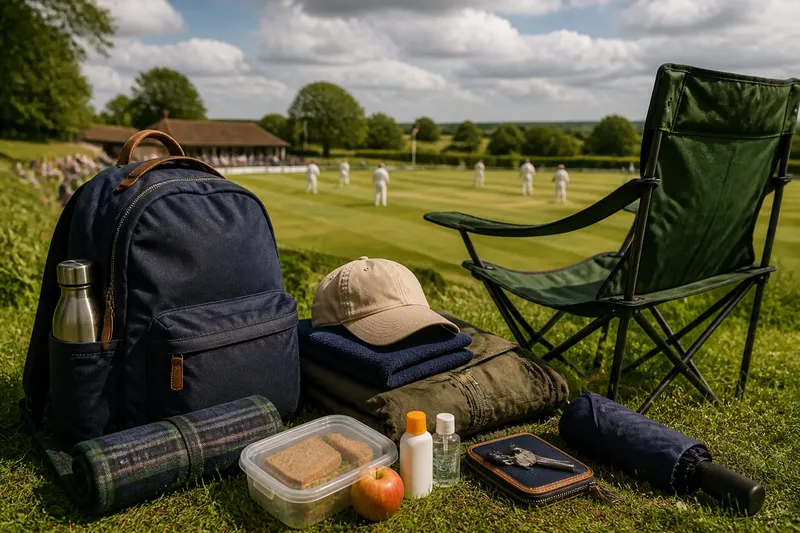
The common mistake when packing for a long day watching village cricket is treating it like a full-day hike: a bulging rucksack can be awkward on narrow paths and leave you rummaging for the one thing you need. Packing for a long day watching village cricket works better when you plan for the ground’s open sky, uneven grass and changing periods of activity, then take only what helps you settle in.
Let the ground shape your bag
A village ground is rarely a neat viewing terrace. You might watch from a folding chair beside the boundary, sit on a bank, or move between a gate, a hedge and the scorer’s table. Before setting off, check the club’s visitor information for parking, seating and any requests about where spectators may stand. A compact rucksack is easier to manage than several loose bags, especially if you have to walk from a lane or car park.
Choose a bag you can carry comfortably and open without tipping its contents onto the grass. A simple daypack with a zipped main compartment and an outer pocket for things you reach for often is usually enough. Keep your phone, keys and wallet together in a small pouch; it is easier to find them at departure than in the bottom of a mixed bag.
Think about where the bag will rest. Dewy grass, dusty earth and the occasional shower can all make the ground a poor shelf. A washable bag, or a small wipe-clean mat folded into an outer pocket, gives you a practical place to put it down.
Dress for a long spell outdoors
Comfort matters more than looking as if you are ready to play. Wear shoes that cope with grass and uneven ground, such as trainers with a useful tread or comfortable walking shoes. If you expect to move around the boundary, avoid footwear that pinches or slips. A spare pair of socks is rarely essential, but can be welcome if a shower leaves your feet damp.
Layers are easier to adjust than one heavy coat. A light jumper or fleece can come out when shade or a breeze makes the afternoon feel cooler; a thin waterproof jacket can be packed away when the sky clears. A cap with a brim helps with glare, while sunglasses can make it easier to follow play when the sun sits low. Keep a warmer layer accessible rather than buried beneath everything else.
Say you arrive in a bright spell and settle on an exposed patch near the boundary. If a cloud bank rolls across later, a compact waterproof and a jumper let you stay comfortable without carrying a bulky coat all day. The useful choice is the layer you can put on quickly, not an elaborate outfit for every possible forecast.
Pack for sun, showers and changing shade
Weather can feel different on an open square from how it did at home. Check the forecast before leaving, but use it as a guide rather than a promise. A small umbrella can help during a shower if you can use it without blocking other spectators’ view; a packable waterproof is often easier to handle in a crowd or beside the boundary.
Bring sun cream suitable for your needs and apply it as directed on the product label. A small bottle is easier to carry than a large bathroom-size container. The edge of a cap does not protect your neck, ears or arms, so consider clothing that covers those areas if you know you will be sitting in full sun.
A refillable water bottle is useful on a long outdoor visit. If the club has a public tap or serving area, check whether refills are available; otherwise bring enough to suit your plans and the weather. Keep the bottle upright in a side pocket or a sealed compartment, away from your phone and scorecard.
Carry a few things that make waiting easier
Village cricket has pauses: an over ends, players change ends, or a brief interruption leaves everyone looking towards the clouds. A book, a small notebook or a quiet puzzle can make a slow spell pleasant without turning your bag into a travelling library. If you like following the score, a pencil and a pocket-sized scorecard are simple alternatives to checking your phone repeatedly.
A portable seat is a personal choice. Some grounds have benches, while others ask visitors to bring a chair or choose a spot on the grass. A lightweight folding stool can be handy, but check the club’s guidance and avoid placing it where it obstructs sightlines, access or play. If you bring a blanket, choose one that folds small and can be shaken free of grass before it goes back in the bag.
Pack tissues, hand sanitiser and any personal essentials you already rely on. A small rubbish bag is useful for wrappers if bins are not close by. Take litter home if necessary, and keep food packaging secure so it does not blow across the field.
Keep snacks and personal items simple
A snack can bridge the gap between arrival and whatever refreshments are available, but there is no need to pack a picnic unless that is part of your plan. Choose food that travels without much fuss, such as a piece of fruit or a wrapped sandwich, and keep it in a reusable container. If you have allergies or dietary needs, bring an option you know suits you rather than relying on a particular menu being available.
Check the club’s visitor notes before bringing alcohol, glass containers or a large cool bag. Local arrangements differ, and some grounds have limited space around the boundary. A modest bottle, a snack and a reusable cup are easier to carry and put away than a collection of containers.
Bring only the personal medication or other items you may need during the outing, stored as you normally would. For medicines, follow the label and advice from a qualified health professional where appropriate. Keep them somewhere accessible, not at the bottom of the bag.
What should you leave at home?
Do I need binoculars for village cricket?
Usually not, particularly if you plan to sit close to the boundary. If you are watching from a distant bank and already own compact binoculars, they may be useful, but they are an optional extra rather than a standard part of the day bag.
Should I bring a camera?
Your phone may be enough for a few keepsake photographs, so a separate camera is best reserved for someone who enjoys taking pictures. Stay aware of players, other spectators and any club guidance about photography.
Is a folding chair worth carrying?
It depends on the ground and how far you will walk from parking. Check whether seating is available, then decide if the extra comfort is worth carrying; a small cushion can be a lighter choice when a bench is provided.
What should I do if rain is forecast?
Pack a waterproof layer and protect the items that should stay dry, such as your phone and spare clothing. If conditions become unsuitable, follow the club’s updates rather than assuming play will continue.
Make the last check before leaving
Imagine you are heading to a match after breakfast, with a short walk from the village car park and no reserved seat. You put a waterproof, a warm layer, a refillable bottle, sun cream, a snack and a small rubbish bag in one daypack; you leave the spare shoes, large camera and extra blanket at home. The expected result is a bag that covers the likely needs without getting in the way as you move around the ground.
Before you close the zip, check the forecast, the club’s visitor information and your own plans for getting there. Put keys and phone in their usual place, make sure the water bottle is secure, and leave room for a layer you may take off. Packing for a long day watching village cricket is less about anticipating every inconvenience than making the ordinary hours outdoors easy to enjoy.